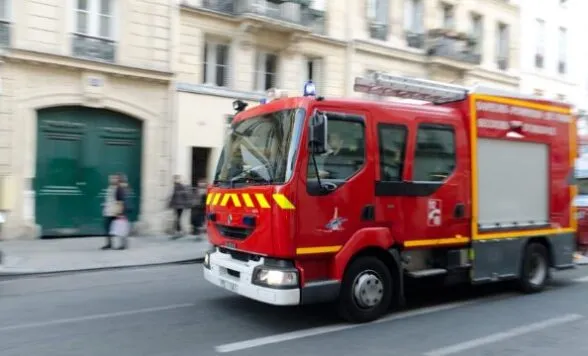
A challenge in accessing information
SDIS missions call for an organizational setup that can log events, escalate information quickly, monitor hazardous situations, and make useful documents available at the right time, including directly in the field.
Before digitalisation, accessing operational documents during a response was not always straightforward. Some site plans or technical information were not consistently available in digital format, which could limit the analysis, anticipation, and command phases of an operation.
What critical issues led to the digitalisation of these practices?
The first issue is prevention and occupational health and safety. Firefighters can be injured in the course of their duties, encounter dangerous situations, or face assaults. Having a tool to report, track, and analyze these events is therefore essential.
The second issue is the escalation of operational information. When a crew identifies unsafe housing, a case of abuse, or an adverse event during a response, that information needs to reach the right people easily, with reliable traceability.
The third issue concerns operational document management. During a response, crews need quick access to site plans, instructions, technical information about a site, or the details required to prepare the response. Having these documents immediately available can improve responsiveness and the quality of decision-making.
Finally, the SDIS needed a solution accessibleto every type of user: volunteer firefighters, career firefighters, administrative staff, management teams, and mechanics.
A single platform for better-prepared and better-documented responses
The BlueKanGo platform is used within the SDIS for many applications covering health and safety, operations, and lessons learned, all with one goal: greater responsiveness.
The solution is also used to structure the reporting of adverse events encountered during a response. Staff can report assaults, flag a situation of concern, or pass on information that requires action from partners or institutions.
Operational document management
Document management is one of the most foundational uses. The documents needed for a response are available on the go, directly from the operational tablets provided in the response vehicles. Before or during a response, crews can view a highway plan, a plan for a pre-registered facility, or information on access points, utility shut-offs controls, and evacuation routes.
For crews, this means less wasted time, better preparation, and a stronger ability to anticipate a site's constraints before responding.
Reporting hazardous situations
Crews can also use BlueKanGo to escalate hazardous situations, serious and imminent dangers, or events that call for further analysis.
Digitalisation makes field reporting easier, strengthens traceability, and gives the relevant managers quick access to information they can act on.
Operational lessons learned
Lessons learned are a major lever for improving practices. With BlueKanGo, adverse events encountered during a response can be reported, analyzed, and tracked.
This turns field reports into concrete actions: adjusting procedures, raising staff awareness, improving instructions, or updating documentation.
Tracking injured firefighters
In work where responses can carry significant physical risks, tracking injured staff is an essential use. BlueKanGo makes it possible to report situations, centralize information, and support follow-up over time.
The goal is to stop scattering data across several tools and instead have a single point of entry to log events, track the actions taken, and improve prevention.
Access for every type of user
The application is not just for crews in the field. Administrative staff, management teams, mechanics, and support functions can also use BlueKanGo to report accidents, flag hazardous situations, or look up information useful to their work.
This cross-cutting approach fosters a shared culture of prevention, traceability, and information sharing.
BlueKanGo ensures document traceability anywhere
BlueKanGo brings together, in one platform, the data related to health and safety, operational events, reports, and documentation. This centralization prevents information from being scattered and makes it easier to use.
With mobile access to operational documents, crews get the information they need more quickly. This makes it easier to prepare responses, anticipate hazards, and make decisions in the field.
Every report, flag, or document consulted is part of a follow-up process. Events no longer stay isolated: they can be analyzed, shared, and turned into improvement actions.
By making field reporting easier, BlueKanGo helps identify hazardous situations more quickly. Prevention becomes more concrete, better documented, and better connected to what staff experience on the ground.
One of the strengths of this approach lies in the broad access given to every type of user across the SDIS. Whether staff are on a response, at the station, in management, or in a support role, they can access the information that concerns them and contribute to the prevention effort.
Key takeaways
For a departmental fire and rescue service, BlueKanGo is more than an HSE tool. The platform becomes a genuine operational support system, able to connect prevention, safety, lessons learned, and field documentation.
Through the digitalisation of key processes, the SDIS gains in responsiveness, reliability, and oversight. Staff have simpler access to useful information, reports are better structured, and data is centralized in a shared environment.
In a line of work where every minute counts, digitalisation delivers very concrete value here: better-prepared responses, better-protected staff, and better use of lessons from the field.
- Testimonial

SDIS60 Testimonial
"Today, all Fire and Rescue Service personnel use the BlueKanGo application."

Florent Alin
Head of Operations and Lessons Learned