In healthcare facilities, crash cart management is a critical issue for regulatory compliance, response efficiency, and patient safety. This case study presents the transformation achieved by a private clinic through the digitalisation of its crash cart, consumables, and perishables management process using the BlueKanGo solution. It highlights the challenges of traceability and optimizing checks in a multi-department environment.
Key takeaways
Digitalising crash carts improves traceability and reduces human error.
An automatic alert system for expiry dates enhances patient safety.
Centralized, intuitive access to cart management enables teams to respond faster in critical situations.
Crash cart management: a real challenge
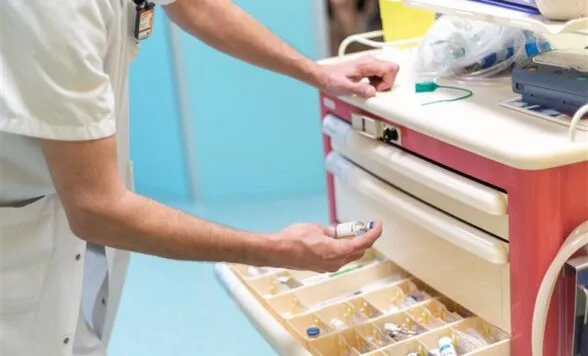
Crash cart management is a major safety and traceability issue. Each cart contains between 100 and 200 perishable items (medications, medical devices) distributed across several departments. Manual checks, often done on paper, are time-consuming, error-prone, and complicate traceability, especially in multi-department facilities like this clinic. Compliance with HAS certification requirements (France's national health authority, the Haute Autorité de Santé) demands greater rigour in managing and monitoring this critical equipment.
Centralized, multi-department management
A leading player in the healthcare sector, the clinic chose BlueKanGo to digitalise its crash cart management. The solution was configured in-house by the anesthesiologist and intensive care physician who serves as risk management coordinator and has been running the platform for several years. All requests are accessed directly through the portal, designed for intuitive navigation. Every department, from maternity to cardiology, has direct access to the management of its dedicated carts, ensuring optimal responsiveness in critical situations. Each department can also provide a detailed inventory of the items stored in every drawer. This rigorous organization is backed by an automatic alert system for expiry dates, making it possible to anticipate any risk associated with the use of non-compliant products.
Traceability, a central concern for healthcare facilities, is ensured through an integrated digital register. Every action, whether a use, a check, or a restocking, is logged with the user's name and the reason for the intervention. This system provides complete transparency, which proves invaluable during audits or certification processes. Finally, to support teams in emergency situations, links to practical documents and video tutorials are available in a single click, offering immediate support and helping staff build their skills.
Digitalising crash cart management has delivered significant results. First, a notable time saving: checks that were once long and tedious are now streamlined, which also simplifies management across multiple departments. Traceability has improved markedly, with every action systematically logged in the platform, particularly valuable during audits or when preparing for HAS certification. Safety has increased as well: automatic expiry-date alerts help limit the risks associated with using non-compliant products, ensuring more reliable patient care.
By digitalising crash cart management with BlueKanGo's QHSE software, the clinic can guarantee safety, compliance, and efficiency, while actively involving medical teams in the continuous improvement of care quality. The success of this project is now inspiring other facilities within the group.
Whether you have a Quality, OHS, or CSR project, or a specific issue to solve, our industry experts are at your disposal. Let's schedule a personalized demonstration of the BlueKanGo platform to discover how to digitize your Integrated Management System (IMS) and meet your compliance and sustainable performance challenges.